Arent Arentsz. genaamd Cabel, Winter scene with numerous figures on the ice
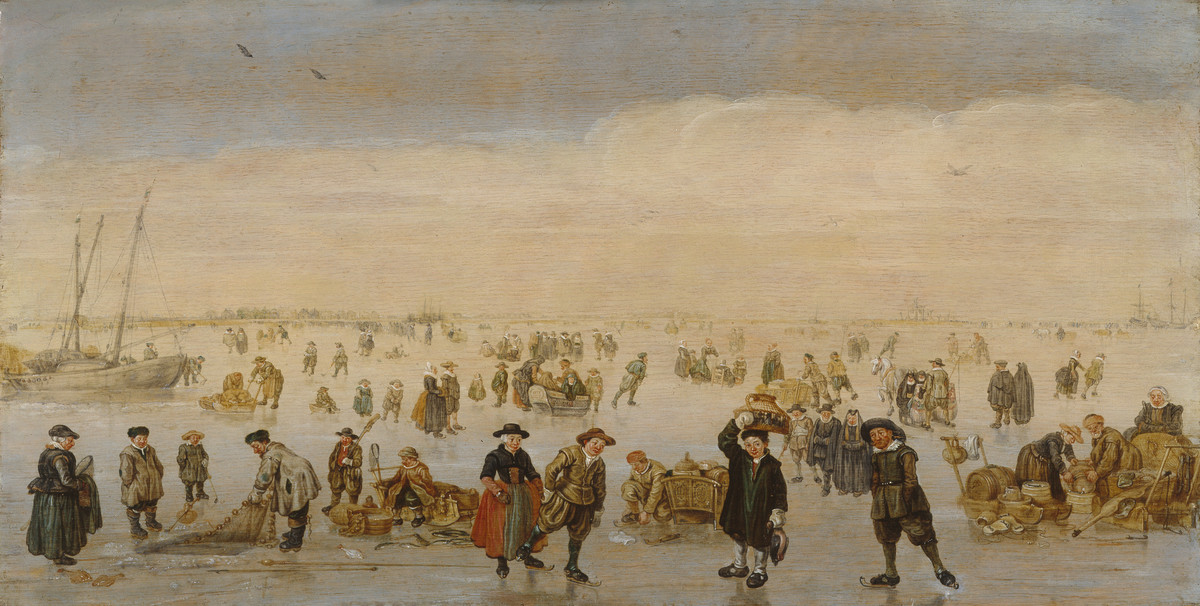
Winter scene with numerous figures on the ice. Arent Arentsz, also named Cabel (c.1585 - 1635)
In the17th century winters in Holland were colder than they are now. The canals often froze over completely, tempting people out onto the ice to work and play. Arentsz depicts the frozen River IJ at Amsterdam from the south, perhaps near, or on, the Schreierstoren, with the village of Buiksloot to the left. Despite the cold, there is much activity on the ice, with all classes of people shown together at work and play: fishing, selling food and drink, and playing colf. As the largest mercantile centre in the Netherlands, Amsterdam always had the latest fabrics and fashions, and the scene provides plenty of detail about contemporary costume, including regional dress, such as the long, black, hooded cloaks, or huiken often worn by women. The distant gallows, a stark reminder of the value of maintaining social norms, might be the Volewijck on the north bank of the IJ. Paintings of the native landscape were much in demand in the Netherlands in the 17th century. Collectors admired the realistic portrayals of the flat, expansive plains, waterways and sand dunes, as well as the distinctive skylines of towns and cities. Dutch artists were inspired to paint in this way by earlier Flemish landscapists, who sketched nature from life, imaginatively embellishing these familiar scenes in their studios. Arentsz obtained the soubriquet Cabel from ‘De Cabel' (The Cable), his house on the Pinsengracht, which he had named after his childhood home in Amsterdam. His subjects were almost exclusively peasants, fishermen and hunters engaged in everyday activities on or near water.
Home, Land and Sea Art in the Netherlands 1600-1800 During the 1600s, the Netherlands underwent significant political change. The mainly Protestant provinces in the north fought for independence from Catholic Spanish rule. This struggle, known as the Eighty Years War, only ended in 1648, when the northern provinces were formally recognised as the independent Dutch Republic. The 1600s was a period of such great prosperity, scientific discovery and artistic creativity for the Dutch Republic that it became the most important country in Europe. The Republic controlled the seas through its formidable navy, and lucrative international trade networks. This increased the nation’s wealth, especially amongst the mercantile classes. With their independence came a newfound sense of identity and national pride which found expression through the arts. Dutch artists found new subjects in the life around them: the domestic lives of women, the broad plains of the local landscape, ships on turbulent seas and still lifes of luxury goods. Many cities including Amsterdam, Delft, Haarlem and Leiden became major artistic centres with talented artists producing works for the growing art market.
Oil on panel. Panel: 25.7cm x 50.8cm; frame: 33cm x 58cm
Manchester Art Gallery (1979.440), Manchester, UK. Bequeathed by Mr and Mrs Assheton-Bennett.
Source: Do Smit